Did You Know?

Did you know?

Wine Cellaret from Mill House Antiques

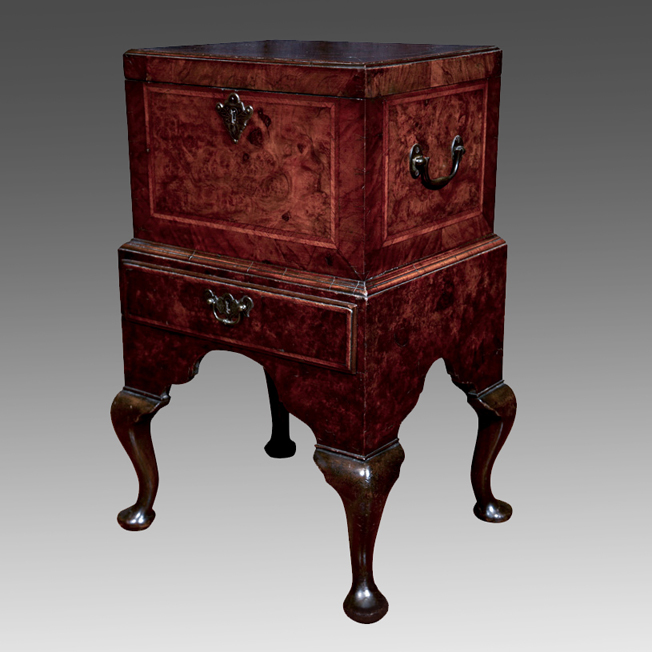
Did you know that a cellaret or wine cooler was quite an important piece of furniture? For those who had not yet acquired an Adam sideboard, where the wine could be stored in a pedestal cupboard, a cellaret served as an essential place to store wine once it was removed from the cellar but not yet not ready for pouring. Since the wines were often chilled prior to their pouring, cellarets were lined with a lead liner to contain the ice and its melt. The size and design of cellarets varied widely from open oval designs to octagonal shaped ones with covers. Most were on legs, which is why today they function wonderfully as end or side tables.

Take this handsome cellaret in burl walnut sitting atop cabriole legs ending in pad feet. While its lead liner has long disappeared, this cellaret itself can still be discovered at Mill House Antiques.

Mill House Antiques and Gardens. More than an ordinary experience.

Must See

“Be Your Own Decorator” by Susanna Salk

Be Your Own Decorator

Susanna’s Salk latest book, “Be Your Own Decorator” is a rich resource for anyone interested in creating a very personalized look to a room. Susanna’s practical tips on mixing traditional and modern looks are especially inspiring. Rooms from more than 50 designers including Kelly Wearstler, Bunny Williams, Albert Hadley, Nate Berkus, and Mary McDonald are featured in this beautiful book.   A must read.

http://susannasalk.com/books.be-your-own-decorator.html#info

Did You Know?

Did You Know?

Did you know that a seaman’s chest not only spoke about his skill as a sailor but his life as well?

When a seaman set sail for distant lands aboard cramped vessels, he would stuff all his belongings in a small wooden chest.  Such chests would represent the entirety of a sailor’s worldly life including sentiments of family and home.  Sometimes a sailor would decorate the inside with a painting of home or his vessel, but always a sailor would display his seamanship in the rope handles he would tie on the ends of the chests.  Fore, no sailor was worth his weight in ballast if he could not tie a proper knot!

Take this fine example of a 19th century Welsh seaman’s chest with its finely tied rope handles and canted sides.  Such wonderful examples can only be found at Mill House Antiques.  www.millhouseantiquesandgardens.com.

Make Mill House Antiques a destination soon.

Did You Know?

Did you know? … one of the earliest forms of container shipping was..

Mill House Antiques Campaign Chest

Did you know that one of the earliest forms of container shipping was the campaign or military chest?  With the onset of the Napoleonic War and continuing through much of the 19th century, British military officers often found themselves being shipped off to the far corners of the Empire.  So too were their belongings. With the heavy-duty side handles, flush drawer handles and brass fittings, these two-part chests were designed to be endlessly loaded and unloaded.  And what sets this chest apart from the majority is the secretaire–a rare and valuable feature.

While you can only imagine the distant lands to where this stunning teak campaign chest has ventured, you can be certain to discover it only at Mill House Antiques.

Make Mill House Antiques a destination soon.

You can also visit our main website at www.millhouseantiques-ct.com.


Did You Know?

Did You Know?

Some chests were married from the start…

Have you ever come across a chest of drawers that had a top half and a bottom half?  And did you wonder why the chest was in two parts?

Well, these chests are quite often referred to as Attic Chests.  They were specifically made for the rooms on the upper level of an estate where the stairwells were much steeper and narrower than the grand staircases that greeted guests on the lower floors.  Without the ability to split the chests, the lucky individuals who inhabited the upper levels of these estates would have been forced to hang their clothes on nails in the walls.

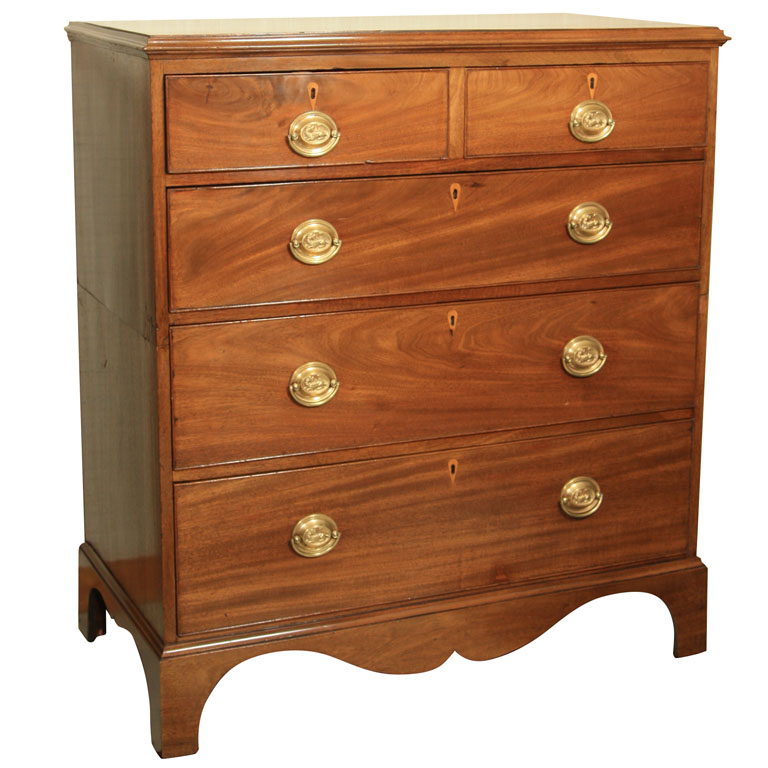
Fortunately a clever cabinet maker came to their rescue.  And fortunately for us, we have a beautiful chest circa 1820 that has survived the demands of daily use and the many trips up and down the narrow stairs where it made its home.  This handsome mahogany chest with oval brass pulls will make any room rich with its warm patina and fine proportions.

Visit Mill House Antiques to view our collection >